Baradla Cave
Baradla Cave
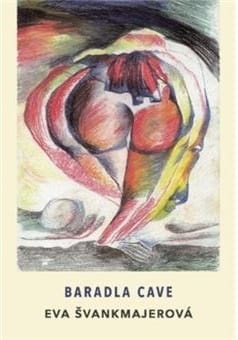
The novel Baradla Cave has lost none of the force of its social critique and trenchant humor since it originally appeared in samizdat in the 1980s and officially published in 1995 by Edice Analogon. A living organism, Baradla is both place (Prague) and person (a woman), an exploration of maternity and femininity as well as a satirical look at the overweening mother-state and consumer society. The language collage comprising pseudo-scientific jargon, the diction of interwar magazines for women and girls, the demotic, and metaphoric stream is complemented by Jan Švankmajer’s erotic collages, as scenes of episodic sexual violence alternate with humorous reflections on various ingrained habits and customs. With a seemingly boundless sense of the absurd, Švankmajerová fingers here practically everything having to do with modern existence: substance abuse, violent sex crimes, rampant consumerism, pervasive corruption, and dysfunctional family relationships.
Tradutor: Gwendolyn Albert
Editora: Twisted Spoon Press
ISBN: 9788086264479
Data de publicação: 2023
Encadernação: Capa mole
‹‹It is like looking at a surrealistic painting. You might say What is going on? but when you look closer there is a certain sense of something even if it is not entirely clear what that something is. Humour and the unreal are part but only part of it, while much of it is letting us see the world in a completely different way from the way we normally do and that i s what Švankmajerová brilliantly does in this novel. The only surprise is that it is not better known.›› – The Modern Novel
‹‹How long must English-language readers wait for someone to translate her.›› – Penelope Rosemont (editor of Surrealist Women)
‹‹Švankmajerová’s mode of literary expression is likewise heavily visual in character and, like her paintings, the writing reflects a delicate balance of reality and irony, humor and terror. […] The novel is an astute and satirical – however troubling – account of late 20th-century›› – Prager Zeitung
‹‹Švankmajerová’s style of surrealism can be daunting at first. The stream-of-consciousness thoughts of one character often wind and wend their way into the mind of another. Whether that mind belongs to a man, a woman, or a cave is sometimes for the reader to decide. But her use of surrealism to convey non-life under totalitarianism pre-dates the same technique visible in Victor Pelevin’s novel The Clay Machine Gun. Both works describe a crumbling society speeding towards America’s consumer lifestyle, with large Japanese corporations in the driving seat.›› – Blue Ear